Home / Blog /


written by Tricia Diaz
President Trump’s declaration of reciprocal tariffs left the world reeling from shock and terrified at the same time. What was shocking about this was that these tariffs were not only applied to America’s enemies, but its closest allies. As we speak, experts around the world are alarmed about how this could affect not only the US economy but the world’s economy at large.
The Caribbean was not spared from these tariffs, as most independent Caribbean nations were slapped with a 10 percent tariff on products exported from the region. These tariffs were imposed on staple products and on products that tariffs were not applied to before, such as arts and antiquities. These were traditionally tariff-free because of the sentiment that taxing these would stifle art, culture and, in essence, creativity. However, with the new administration, this rule has changed and with this change, startling effects on the world of art.
[Additional Read: Making HERstory: Kamala Harris is the First Vice Presidential Candidate of Jamaican and Indian Heritage]
This article seeks to discuss the impact of reciprocal tariffs on art galleries, fairs, exhibitions and costs of art materials and how these affect artists and the global art market and also the art world of the Caribbean region.
What is a Tariff, and the Pros and Cons of Tariffs?
Day after day, news of the effects of President Trump’s reciprocal tariffs are blasted over the media. Many experts state that these tariffs would have a negative impact on the world’s economy. Yet what is not being fully explained is what are tariffs, why were they created and what are some pros and cons of tariffs?
To begin, a tariff can be simply explained as a trade instrument in which a duty is levied on the importation of particular goods or products into a country Tariffs | ITC This levy is usually expressed as a percentage of the product’s value and is dependent on variables such as the type of product and the country the product was imported from.
Tariffs were created to protect a country’s domestic interests and to equalize what they deem to be an unfair advantage by the foreign country. This may be due to lower labour costs, production costs, economies of scale or the results of benefits gained by the foreign company’s use of government subsidies. It is hoped that the use of tariffs may invigorate the local economy and that the consumer may be motivated to buy cheaper, local alternatives.
Many people today view the effects as only positive or negative, but the reality of the situation is far more complex. For example, tariffs that were applied due to geopolitical differences between countries could result in trade wars and these last much longer than most expect . In addition to this, the tariff could What is a Tariff and How Does it Impact Trade? | BCG not only affect the foreign country but also the country that applied the tariff. Local companies may get some of their components from foreign countries which they applied tariffs on, resulting in effects on their own economy. Sometimes the number of components is quite numerous, resulting in complex and unpredictable effects on both economies. Not to mention that consumers may be impacted by higher prices as companies are forced to pass on the cost of production onto the consumer.
Tariffs and the World of Art: A breakdown of the events
As stated earlier, tariffs and import taxes were traditionally exempt from works of art in the United States. However, with President Trump’s declaration of reciprocal tariffs to countries all over the world, this is set to change. Canada and Mexico have both been hit with a 25 percent tariff on their products; with Canada getting tariffs placed on all exports to the United States, while Mexico was subject to a general tariff.
The European Union was given a 20 percent tariff on all exports and China was subjected to a whopping 145 percent tariff. This includes the arts and antiquities that come from those countries of origin. Although this may sound totally devastating to many, there are layers of complexity that have put many collectors, investors and experts in the field filled with uncertainty. The main reason for this is that original works of art are protected from tariffs under the 50 USC-1702 statute. This applies to works of art such as paintings, prints and sculpture. Antiquities and antiques are not exempt, however. Printed materials such as photographs and books are also exempt as the statute recognizes these as “informational materials” Will tariffs reshape the art market as we know it? 3 experts weigh in | Art Basel .
While this may seem straightforward, it is not as there are artworks that can be classified as original works of art, but can also be classified as antiquities and pieces of furniture at the same time. For example, an ancient vase depicting gods from the Greek pantheon can easily be classified as art but also as an antique because of its age and as an item of furniture because of its utilitarian function. As such, it will not be exempt from tariffs. This form of uncertainty leaves art dealers, collectors and investors in a free fall trying to discover and maneuver unfamiliar territory.
Tariffs and the effect on galleries
It is well known that both the United States and China account for over 60 percent of the world’s global art market sales. The new tariffs and the rebounding tensions that are ensuing as a result could have a serious effect on the global art market. Galleries have been grappling with increasing costs since the pandemic, and now have further burdens on them because of President Trump’s declaration. In countries where high tariffs were placed on such as Canada and Mexico, galleries are also facing the effect of high import fees, shipping costs and miscellaneous material expenses. These, coupled with inflation, are eating away at the profit margins that these galleries expected to make from art sales How Trump Tariffs Impact the Art Market – Artsper Magazine.
Tariffs and the effect on art fairs
As many galleries are grappling with high import, shipping and logistics costs, they have decided not to take part in international fairs. This could mean that many emerging artists affiliated with such galleries could miss an opportunity to be discovered and known internationally. It could also mean less diverse artworks and less variety of art for collectors to choose from.
Tariffs and the effect on exhibitions and auctions
Exhibitions could become less diverse in their art offerings and show strictly local artists as opposed to international ones in an effort by galleries to avoid tariffs. This could deter collectors who want to see an array of internationally acclaimed artists to add to their collections.
As for auctions, many auction houses are facing issues with logistics and sales locations, as they anticipate an increase in costs because of tariffs. To counteract this, some auction buyers and sellers are deciding to store artworks in free ports or to place and store some artworks in cities outside the US to avoid tariffs (Caddeo 2025).
Tariffs and the effect on artists
The tariffs also affect artists by not only the increasing costs for art materials, but also cause an increase in the costs to ship their artwork internationally for art fairs and exhibitions. This may act as a deterrent to show works internationally.
Tariffs and the impact on the global artworld
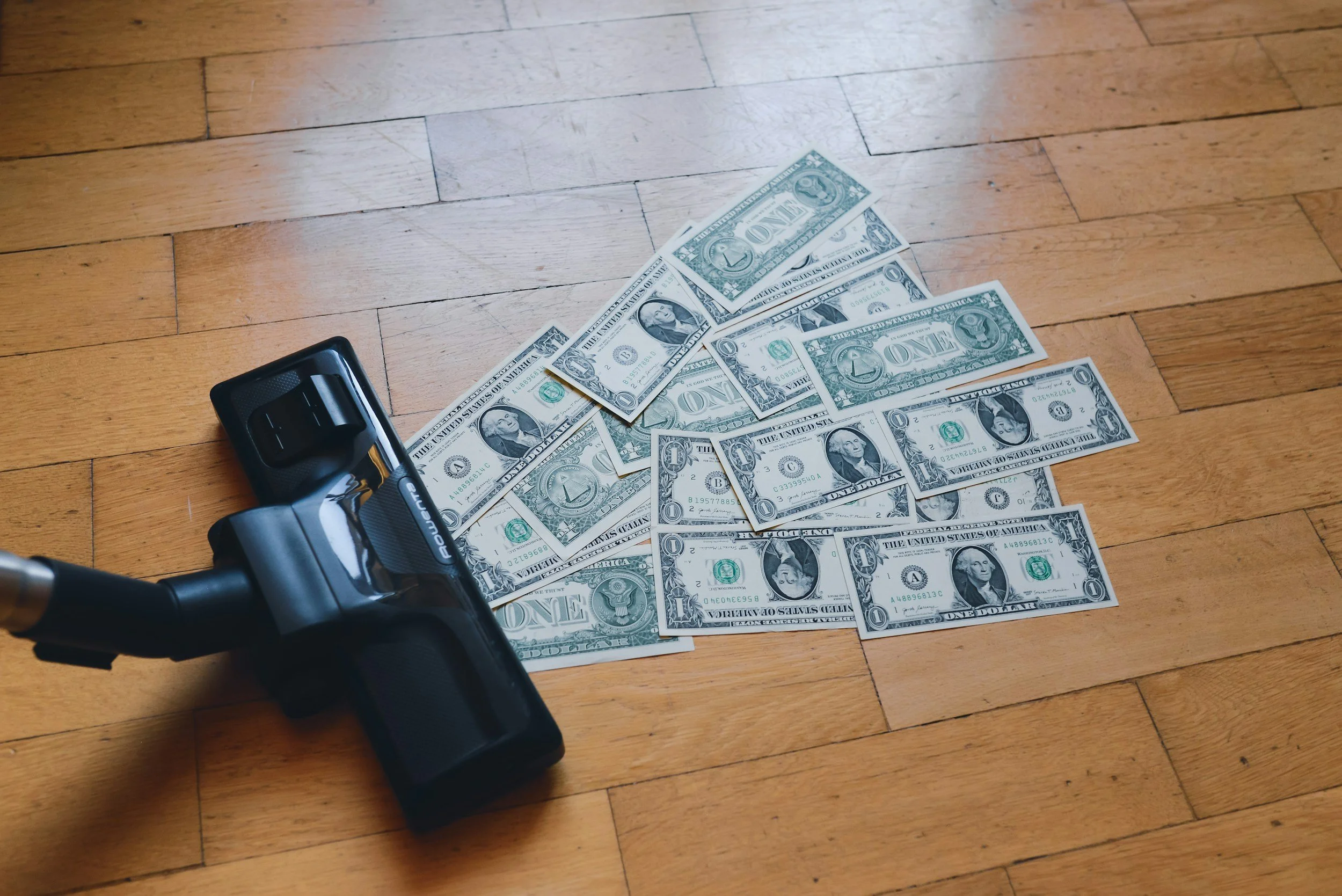
As a response to these recent developments, art sales have now become more focused on the online space. Art dealers and collectors alike have decided to do more of their business online. They have decided to utilize viewing rooms and digital exhibitions to conduct transactions. However, online transactions still have to face the reality of tariffsTrump’s Tariffs Impact Global Art Market in April 2025 . This is because although the transaction may incur little or no fee to participate in or view, buyers will still have to face tariffs when the product needs to be shipped to them. To combat this, most art markets allow the buyer to state their location when making purchases to avoid excessive fees due to tariffs. Another aspect of art sales that seems to be unaffected is that of digital art and NFTs. These have no physical form and as such have an advantage compared to traditional forms of art.
Another impact of the tariffs that have been discussed by experts Will tariffs reshape the art market as we know it? 3 experts weigh in | Art Basel is that these tariffs could potentially cause a shift in the global art market. It could shift the boundaries in the global artworld by creating a shift away from New York as a global art centre and instead create a new art centre that is more favorable to trade (Art Basel). They cite the history of London being a premier art centre until a 5 percent tax was introduced, causing a shift in the art world at the time to the US. This helped New York to be the premier art centre that it is today.
Tariffs and the impact on the Caribbean artworld
The tariffs placed by President Trump could also have an effect on the Caribbean artworld. The Caribbean has struggled over the years to create an active, vibrant art community. Over the years there have arisen four vibrant art communities in the Anglophone Caribbean. These four communities are located in Jamaica, Barbados, Trinidad and Tobago and the Bahamas. These communities create residency opportunities, exhibitions and screenings and a regional art fair called The Caribbean Fine Art Fair Welcome to the 15th annual Caribbean Fine Art Fair or CAFA that is held every two years. This fair is yet to achieve international acclaim.
The Caribbean usually imports most of its art materials from all over the world and is yet to create art materials regionally. Because of this art stores will be impacted by the wave of reciprocal tariffs. This will make the process of creating art challenging for Caribbean artists.
Moreover, the tariffs could affect the CAFA by causing a lower amount of work that could be sold at the fair. The reason for this is that many international collectors could be deterred by the increase in cost to acquire a work of art from the Caribbean.
In addition to this, many art galleries in the Caribbean perform the role of framing shops while also being exhibition spaces. Most of the wood and materials required for this comes from many different areas of the world causing small galleries to be impacted by tariffs as they see an increase in taxes that eat into their profit margins.
Although it seems that the Caribbean with its small global footprint will not be able to withstand these shocks, there is hope. As art markets undergo this shift, there is an opportunity for Caribbean artists and by extension the Caribbean artworld to expand, grow and achieve worldwide recognition. This could be achieved by anticipating and seizing the opportunity using economics. For example, by allowing a free zone where art and culture could be produced, bought and sold with minimal taxes, tariffs and levies many art fairs, collectors and gallery owners of international acclaim, would be attracted to the region and this could invigorate and foster a thriving art industry. This could also benefit other sectors of the economy such as tourism.
President Trump’s declaration of reciprocal tariffs has had an impact on the entire world. The effects on the artworld are multi-faceted and wide-ranging in scope.The newly introduced tariffs will have an impact on art galleries, art fairs, exhibitions and the artists themselves. With the changing dynamics of US foreign relations, the Caribbean can use its desirability as a tourism destination coupled with economic incentives to attract key art collectors and international art events to the region. It is hoped that regional governments can effectively negotiate and provide incentives that would benefit both artists and the economy alike.
READ MORE