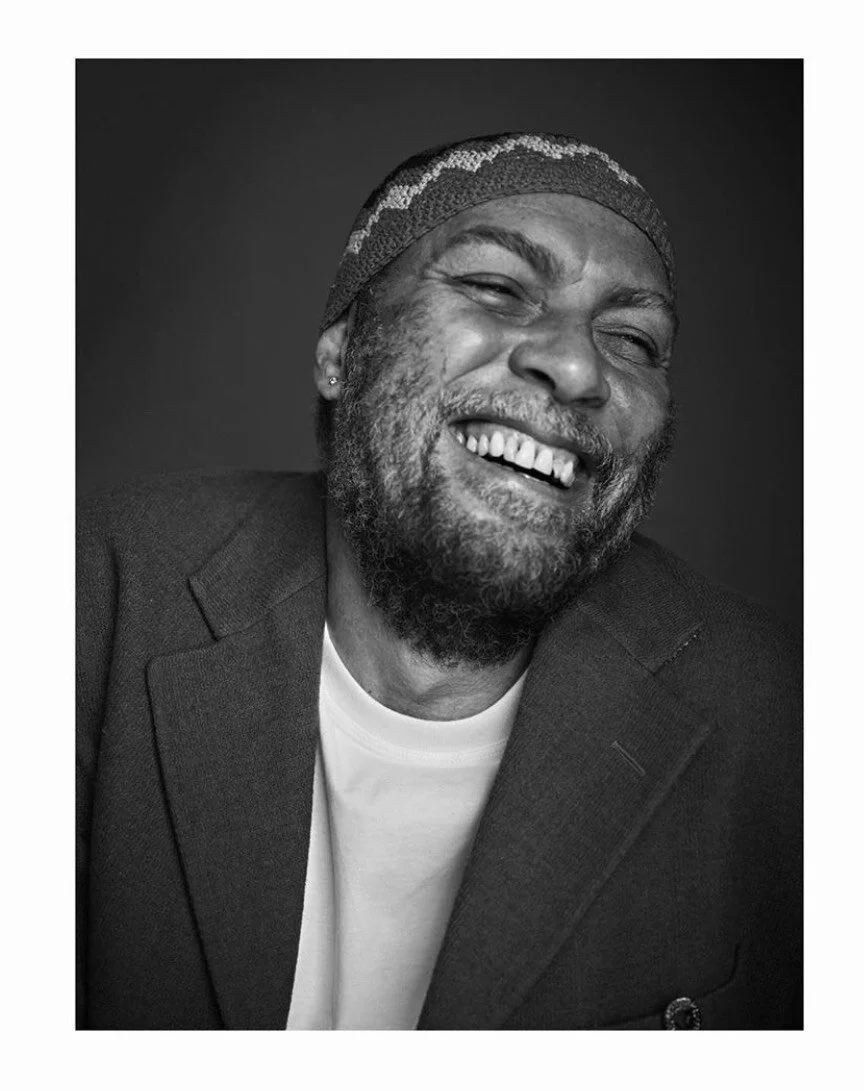
Trinidadian LGBTQ+ activist Jason Jones has set a groundbreaking precedent for activists and LGBTQ+ members within the Caribbean community.
Jones, who was born in Trinidad is the son of an English mother and Trinidadian father and playfully refers to himself as “Tringlish.” As a child, he developed a love for the arts and often performed as a church soloist. With Trinidad’s anti-gay environment, in 1985 at the age of 21, Jones relocated to London where he studied theatre and acting.
Coming from Trinidad’s homophobic environment, he was excited to be in London where the LGBTQ+ community was stronger. The community was thriving in comparison to Trinidad’s community.
It was also in London that Jones began his journey as an activist. In 1988, the controversial law known as Section 28, criminalised the “promoting” of homosexuality. This included any discussion about homosexuality in schools, having books on it in libraries and disbursing government funding to LGBTQ+ organizations. The now-repealed law was an infringement on human rights. Passionate about the cause, Jones began to take part in marches against the law alongside other prominent activists like Ian McKellan and Michael Cashman.
Activism was not new to Jones. His stepfather is activist Rex Lassalle, one of the army mutineers in the 1970 Black power revolution.
“I grew up around people who were activists so my DNA is hardwired to do this work,” Jones says.
In 1992, Jones returned to Trinidad for a visit but ended up staying for the next three years. In the summer of 1992, he did his first public drag show, making the front page of the local paper. Its publicity caused intense disapproval from Jones’ family. As a result he was disowned and became homeless. During this time, the AIDS pandemic was climbing and Trinidad had the highest mortality rate from the disease in the world per capita. Trinidad’s LGBTQ+ community was being destroyed and Jones found himself attending funerals weekly. It was from this tragedy that he co-founded The Lambda Group, which focused on the fight against AIDS and the fight for equality and rights. While the group met weekly in a local theatre, their numbers dwindled as many fell victim to the killer virus.
In 1996, Jones moved back to the UK with his then partner and joined the Stonewall Immigration Group which is now known as the UK Lesbian & Gay Immigration Group. During this time, he learned about fundraising and volunteer activism. The group was fighting for the rights of the same-sex partners of UK citizens overseas to be granted residency.
photo courtesy of Chris Jepson Photography
By making friends with the labour government opposition party, the group was able to exchange the gay vote for the passing of this law. In 1997, the party came into power and the law was passed, granting same-sex partners UK residency based on cohabitation of at least four years and full citizenship after an additional five years. It’s important to note that Jones and his Trinidadian partner served as one of 40 test cases which brought about the landmark win.
“This was the first positive gay legislation in the United Kingdom post decriminalization 30 years earlier in 1967. So I have the honor of being the only activist in the world to change the law in two separate countries because I’m a citizen of both countries,” Jones says.
But it was in 2017 that Jones would take on his largest project yet. He began working on repealing all legislation in the Caribbean that discriminated against the LGBTQ+ community. Jones explained that many Trinidadians didn’t realize these laws existed or could be used against them. Some of the laws included members of the LGBTQ+ community being denied entry into Trinidad and two people of the same sex not being allowed to rent a hotel room.
On April 12, 2018, he won a landmark legal challenge at the High Court of Trinidad and Tobago which decriminalised adult same sex intimacy. This win guaranteed freedom for nearly 100,000 Trinidadians and set a precedent. The case was also cited in a recent case that led to a decriminalisation victory in India.
photo by lloyd jr on Unsplash
Come 2025, Jones will stand before the UK’s Privy council for LGBTQ+ decriminalisation. His victory there will assist decriminalisation in at least 10 other countries across two continents.
“The only way to change hearts and minds is to change laws. Unless you have laws that protect minority communities, there’s no way you can break this deeply-entrenched-hundreds-and-hundreds-of-years of homophobic ideology,” Jones says.
Jones explains that in Caribbean countries like Trinidad, the majority of the LGBTQ+ community is hidden and members are often afraid to come out to their peers. Many are forced into a closeted lifestyle and live in fear of abuse.
In his line of work, Jones is no stranger to the type of abuse and homophobia directed to the LGBTQ+ community. While fighting his case in 2018, he received over 200 death threats on social media. Despite him reporting the threats and having an active police case, no one has been legally reprimanded. At the peak of the harassment the U.S. embassy temporarily stepped in to provide him safety.
Despite these obstacles, Jones will continue to prepare for his case hearing in 2025 and is working with CARICOM Caribbean Community, an organization dedicated to creating equality in the Caribbean for all groups. He believes that with the help of a strong organization, more will get done towards creating individual rights for the communities that need it. He also plans to work with more up and coming activists who he hopes will take the stage when he steps down after his case with the Privy council. To the future generation of activists Jones has this advice:
“If you want change, you need to sacrifice and you need to work hard. Find your own route to it, don’t look at following other people’s footsteps. Forge your own path. Be clear about what that path is and what you want to achieve in the end.”
Jones notes that each of us plays a role in the fight for equality. Simple things like correcting someone’s offensive language and being conscious of own makes a big difference.
While we wait for the results of Jones’ case in 2025, many hope the outcome will be one that leads to equality and safety for members of the LGBTQ+ community everywhere.
photo by Ian Taylor on Unsplash
Read More
Black HERstory: Rebels, Revelers and Revolutionaries
Shelley Worrell: The Cultural Pioneer Who Founded the World’s Only ‘Little Caribbean’ Neighborhood
World Mourns Passing of Two Female Caribbean Icons