Gender-based violence (GBV) is a global concern. This epidemic is disturbingly normalized across many cultures including our very own West Indian community.
I don’t know a woman who has not had to take precautions against being physically or sexually attacked for their gender identity. From not staying out too late to being told not to dress a certain way, West Indian culture has taken part in GBV.
GBV is a symptom and result of a much bigger problem —patriarchy. Patriarchy raises and conditions males to value status, money, network and power while dismissing cultivation of emotional intelligence and empathy toward female counterparts.
Men are seen as builders of success in a capitalistic society, while women are viewed in terms of reproductive abilities and as sexual objects. This oppressive system encourages a sense of entitlement to women’s bodies. Non-conforming individuals are viewed as broken according to this archaic system.
In early 2021, the West Indian community grieved the murder of Andrea Bharrat which also brought up the death of Ashanti Riley. These two young women lost their lives as a result of GBV. There has been an increase in cases of women whose lives ended prematurely since the start of COVID-19.
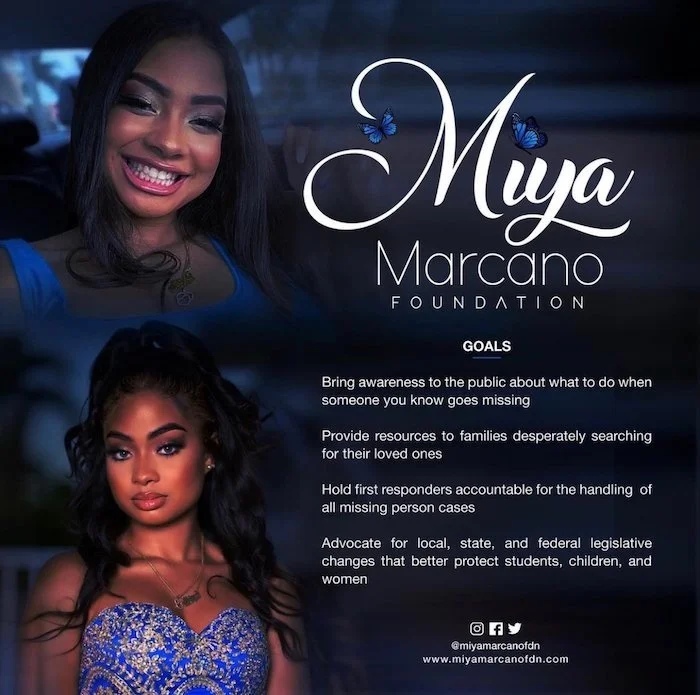
The latest is Miya Marcano —another West Indian woman who was murdered in October.
Marcano, a 19-year-old college student, was kidnapped by Armando Caballero on Sept. 24, 2021. Caballero, 27, was a maintenance worker in Marcano’s apartment complex –the Ardes Villas. Marcano disappeared after he used his key fob to enter her apartment.
Despite overwhelming evidence of his involvement, Orange County Police Department did not immediately detain Caballero. Unable to deal with the consequences of his actions, Caballero chose to take his own life. Marcano’s body was found on Oct. 2, 2021, with her mouth, arms and legs bound by duct tape.
Before her disappearance, Marcano was harassed repeatedly by Caballero because she did not reciprocate his romantic interest. Aggressively pursuing someone should not be confused with compliments. Abuse, sexual harassment and rape have nothing to do with an individual’s desirability or attractiveness. Toxic masculinity has everything to do with a sense of entitlement and need to control or dominate women..
The gold old “boys will be boys” mentality perpetuates GBV. With this phrase, there is acceptance of bad behavior from men and boys while women and girls are expected to accept such treatment. Most women can recall elementary school when they heard the phrase “he is mean to you because he likes you” whenever a boy crossed boundaries.
Marcano’s death is not the first shocking case and will not be the last horrifying death unless the West Indian community agrees make the necessary systemic changes to dismantle patriarchy.
Today women are empowering each other and working on ending the cycle of misogyny through various platforms and organizations. Women are connecting with other women and being open with their vulnerabilities. Historically, women have fought side by side for the right to vote, run for office, financial freedom, criminalizing marital rape, filing for divorce, winning Roe Vs. Wade, the right to education, Title IX and much more. However, there is still work to be done, particularly in the area of reproductive justice.
So, what can the community do?
First, we need to have these difficult and uncomfortable conversations about GBV as a community.
Second, we need to reframe the problem. GBV is framed as a women’s issue, which is concerning since most aggressors are men. This perspective frames gender violence as a victim’s issue and not the aggressor’s issue. The responsibility of creating change, overcoming trauma, recovering and raising public awareness is shifted onto the shoulders of female victims while aggressors remain unchanged. GBV is a men’s issue, women are subject to its symptoms.
The silence and complicity of rape culture enable aggressors and puts more women at risk of becoming victims in the same culture and environment. As potential victims of GBV, women can only reduce and manage risks through actions like self-defense classes. However, women cannot prevent violence.
Third, we need to challenge patriarchy. A patriarchal culture encourages men to see women for gender rather than as human beings. This reduces an individual’s qualities to their gender and is dehumanizing.
Not physically or verbally assaulting a woman should be a societal default regardless what a woman is wearing, how she speaks, or presents herself. Men need to see women as human beings.
Fourth, male allyship is essential in ending GBV and it involves men calling out their fellow men on abuse, harassment and rape. Men need to listen, learn and support women to be male allies.
When a male ally shows up and talks about protecting the women in his life because he cares about them, he needs to check in with his fellow men who may be filled with aggression and not willing to unlearn sexist behaviors. Men are more likely to listen to male peers than women for one patriarchal reason –men respect other men and are more likely to view them as equals.
What does male allyship look like? These are men who are comfortable pointing to women who inspire them and view women as equals. Male allies are genuinely impressed by women’s strength. They do not feel the need to be in the spotlight and are not threatened by decentering themselves. They are not lazy in their self-reflections. They hold other men accountable.
Most importantly, male allies also forego the male superiority complex. They do not assume women are not as equipped. Instead, they create space to allow women to process problems and derive an effective solution. If input is needed while working towards a solution, then he offers to help in the form of an equal partnership.
Fifth, West Indian men must be open about their aggressions, their own traumas and mental health conditions. It is essential to ending toxic masculinity, a major contributing factor to GBV. Mental health is a taboo topic in the community and must be discussed!
To change GBV the focus should not be solely on protecting women but also evaluating male peers.
A stable and safe community is built on collaboration and genuine respect across gender, race and socioeconomic status. Community is built on trust, respect and equality. Thus, it is important to call on all men to heal through accountability and self-reflection as well as accepting the consequences of poor behavior. Healing men and eradicating the “boys will be boys” mindset will systematically protect the West Indian community from male violence and encourage boys who grow into safe and healthy men.
About the author: Savita Prasad graduated CUNY Hunter College with a bachelors in Biological Life Sciences and Psychology and is currently pursuing the field of medicine. Born to Guyanese parents, her West Indian heritage is important to her and is unapologetic when it comes to representing. She is involved with various nonprofit organizations aiming to address social injustice and providing resources to underserved communities.