Op-ed: 3 Steps West Indians in the Diaspora Can Take to Help Climate Change and Food Security in Grenada
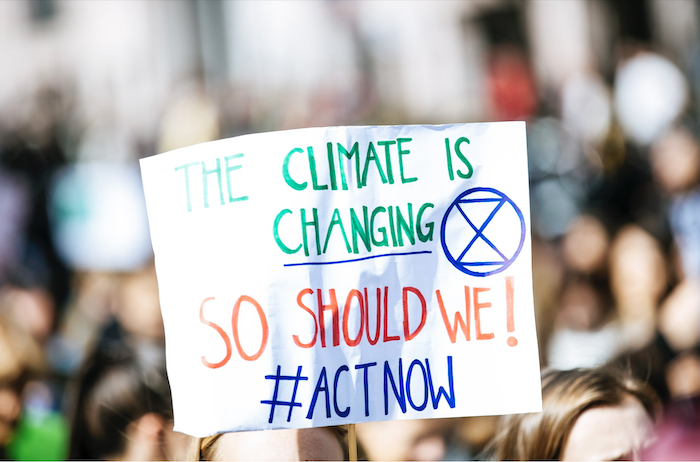
Photo courtesy of Markus Spiske for Unsplash
written by guest contributor Angela Stegmuller
Though I will likely be shielded from the public health impact of climate change, it’s frustrating that the lack of political will to address climate change will devastate my ancestral land, Grenada.
My mom was born and raised in St. Patrick, Grenada and immigrated to the United States, where I was born. For most of my life, I did not appreciate my Caribbean heritage. Now that I am older, I plan to do everything in my power to preserve it.
According to data from The Global Carbon Project,the cumulative share of global CO2 emissions as of 2020 for the US is 24.56% while Grenada’s is so low it doesn’t even round up to 0. Yet, the public health impact of climate change on Grenada is significant. West Indian Americans, like me who are part of the diaspora, have an important role in reducing the havoc of climate change on our islands.
The COVID-19 pandemic has exposed the weaknesses in an already fragile food system in Grenada. The Caribbean imports most of its food and Grenada imports approximately 70% of its food. This reliance makes Grenada vulnerable to increased food insecurity due to price fluctuations and availability.
In April 2020, the Caribbean Community (CARICOM) COVID-19 Food Security & Livelihoods Impact Survey found that food availability improved from April 2020 to June 2020. However, 72% of participants said that food prices increased compared to 35% in April.
The Grenadian government recently introduced new funding to improve local food systems and reduce the reliance on imports. However, the agriculture sector will have to change in order to create a sustainable food system that is not reliant on outside imports and creates room for a new generation of young famers. The construction of an automated greenhouse in La Sagesse is step in the right direction and should encourage more similar changes.
Grenadians are lucky to have relatively fewer hurricane threats compared to other Caribbean islands. However, with climate change, that could change. Increased tidal surges and flooding will contaminate local water supplies, causing water-borne illnesses. Severe weather will damage critical healthcare infrastructure when it is most needed.
Currently, too many Grenadians rely on charity hospital ships and medical tourism. Hurricane damage will only make the problem worse. Lastly, climate change has made the dry season drier on many Caribbean islands. There is a cruel irony of being surrounded by clear, turquoise water and not having enough to drink.
Without a sufficient supply of nutritious, affordable food, clean drinking water and a functioning healthcare system, the health of all Grenadians is jeopardized. The good news is that those of us in the diaspora are well-suited to help our ancestral communities prevent this bleak outcome.
Here are three actions the diaspora can take to address the climate-related public health challenges in Grenada.
1. Hold the Government Accountable
Hold the government account for enacting policies that mitigate the impact of climate change. Those of us who live in the U.S. need to ensure that our policies are not harming the Caribbean region. Any policy that reduces the threat of climate change is a win for Grenada and the Caribbean at large. The Build Back Better Plan is just one example of policy that we need not just for Americans, but for our people back home. Voting in both national and local elections is a critical part of holding our elected officials accountable.
2. Support Caribbean-grown Food
Grenada is known as the Spice Isle because of its rich history growing spices. I purchase all my nutmeg, cinnamon and bay leaves from the island to support small-scale Caribbean farmers who are working hard to improve food systems on the island and reduce reliance on high-income countries. When on the island, enjoy food cooked by locals using crops such as cassava and dasheen over white flour and imported vegetables.
3. Do the Work Ourselves and Own it
We cannot rely on the outside world to bring our perspectives to the climate change roundtable. After hundreds of years of French and British colonization, it’s easy to think that we must seek aid outside the Caribbean to make positive change. We need to invest our time and resources into our own communities.
Grenadians on and off the island together have collective knowledge, skills and expertise to adapt to the challenges climate change brings. A great example is Bobbie Garbutt of L’Esterre Estate. After splitting her time between the United Kingdom and Grenada, she returned to the island to revitalize her family’s nutmeg and cocoa plantation using regenerative agriculture.
Those of us in higher-income countries like the U.S., who bear much of the responsibility for the magnitude of climate change, need to act in order to preserve Spice Isle and the health of its people.