To the forgotten, to the raped, the beaten and slain. For our mothers, sisters, wives and future generations of girls and women, we dedicate this article to you.
“Between 2007 and 2017, he was arrested and charged with 70 crimes, including multiple counts of rape, kidnapping, false imprisonment, larceny, and robbery with aggravation. He was granted bail in every instance, and discharged in more than 30 cases when the police and allegedly victims failed to show up in court…”
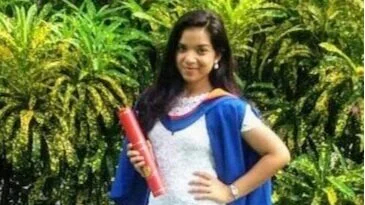
On Jan. 29 2020, 23-year-old Andrea Bharatt vanished after getting into a taxi after work. She and a co-worker rode together. While her co-worker made it home, Bharatt did not. Her family began to worry when she didn’t return home at her usual time. When her father attempted to contact her, his worst fear was confirmed— Andrea was being held for ransom.
Bharatt’s captors threatened to have her ears cut off and mailed to them if the amount requested was not paid. Her family contacted the police and the search began. On Feb. 4, almost a week after her abduction, a woman’s body was discovered by a commuter at the foot of a precipice in the Heights of Aripo. Police arrived at the scene to find a barely clothed body that was well into the stages of decomposition. That afternoon Bharatt’s father Randolph Bharatt, identified his slain daughter.
During the week of her disappearance, many of us held on to hope that she would be found and returned to her family. When news broke that Bharatt’s body was discovered, it was heartbreaking. This overwhelming emotion is the result of the Caribbean community witnessing yet another woman’s death as the result of gender-based violence.
Trinidad is no stranger to gender-based violence. With women being disproportionately affected, it’s an epidemic that is actively plagued the country. In 2020, 416 of the 745 people missing were women. In 2019, 535 of the 940 missing people were women. This doesn’t include statistics on domestic violence, which are often overlooked and minimized. Between 2011 and 2016, 4,956 reports of violence in the home were reported to police. 96% of the incidents involved women and girls. Across Trinidad and Tobago, one in three women and girls in unions have suffered abuse— and 29% of those have experienced both physical and sexual assault.
Cases like Bharatt’s are normalized and the push for change is underwhelming. Social media has drawn attention to the fact that Trinidad’s policymakers have neglected the safety of their citizens as well law enforcement’s lack of effort in investigating and prosecuting perpetrators. Bharatt is not the only woman to have violently died, but she has become a symbol of a perpetual problem.
Over the past year, other notable cases of violence against women have included those of Ashanti Riley, Suzette Sylvester, Shannon Banfield, Reshma Kanchan and Krystal Primus-Espinoza. There must be a push from the Trinidadian community that holds the government accountable and pushes leaders to transform the systems of education and legislation around gender-based crimes.
Bharatt’s murder prompted Trinidad police to take a deeper look at a series of sex crimes in which women were raped, murdered and their bodies never found. The main suspect, 38-year-old Devon Charles who is now deceased, had an extensive list of previous offenses including being charged in 70 cases and multiple counts of rape and kidnapping dating from 2004- 2020.
Given Charles’ criminal history, why was he granted bail and allowed freedom? He was a threat to public safety. Without significant consequences, such criminals are certain to offend again. Translation: another woman will be beaten, raped or killed.
So how can the Caribbean change gender-based violence? It starts at home. There is a significant need for fathers, uncles and brothers to stand in solidarity. There is very little education around gender-based violence and sex crimes provided to men. Culturally, Caribbean men do not call out the inappropriate actions of male peers. We need men to teach their sons, nephews and loved ones boundaries and respect for women: no means no, you cannot force a female to speak to you, to have sex with you and that harassing women after the end of a relationship is not acceptable. Men need to take responsibility and recognize the culturally toxic mentalities that perpetuate the belief that men retain ownership and power over women. Male solidarity matters in the fight for gender equality.
Following the announcement of Bharatt’s body being found, a petition has made its way across social media titled “ PROTECT OUR WOMEN IN T&T.” The petition was started by a woman named Asha Moosai and has generated over 100,000 signatures and calls for Trinidad’s government to implement strategies that keep women safe. Some of the suggestions include legalizing pepper spray, registering all ‘private’ cars that operate as taxis and enabling their locations through a nationwide database, adding names to the sex offender registry and not granting bail for offenders with multiple charges against them. Since being uploaded two days ago, the petition has received over 100,000 signatures of the 150,000 it’s asking for. Once it reaches the intended goal it will be shared with the Minister of National Security.
Caribbean women and girls are often taught to do their due diligence to protect themselves. This means not dressing a certain way, not staying out too late etc. But the reality is they they are unsafe and in countries with weak protective legislation. As young women, we are often told: ‘Don’t travel by yourself,’ ‘Don’t take certain methods of transport’ and ‘Don’t dance like that.’ But what happens when we follow the rules and are still violated? And if we don’t follow the rules, why are our chances of being harmed greater? How do we move forward, knowing our mothers and sisters are still at risk? How can we address the toxicity and patriarchy that continues to show up in our societies with no one being held accountable?
Bharatt, along with all other missing and murdered women, represents all of us. We are them. Today we are dealing with yet another slain sister, but we cannot allow her name or any of these women’s names to be forgotten. We can’t forget the countless women whose stories haven’t received media attention. Their deaths cannot be in vain. Each of them deserved better. They deserved to walk safely on the streets without being assaulted, abducted, cat-called at and harassed.
In Andrea Bharatt’s name, in the name of every woman who has been taken due to brutal and senseless acts of violence, we need to do more than grieve, we need to create change. To the women whose stories are forgotten, who had bright futures ahead of them: you are in our thoughts, we will not forget you, we will continue to share your stories, we will push to do better and we will demand justice for each of you.
To learn how you can demand justice for the women of Trinidad visit Feminitt Caribbean.
Featured
Still Looking for Holiday Gifts? Caribbean Brands Offering E-Gift Cards for Last-Minute Shopping
Indo-Caribbean Beauty Magazine Marks 5 Years of Empowering Women and Redefining Representation
Guyanese American Karen Young of Oui the People on Redefining Beauty with Purpose
How Sandrine Sophie Is Redefining Clean Beauty with Kalia Nature
Clean Home, Clear Mind: Minimalist Tips for Spring Renewal
Holiday Gift Guide: 10 Caribbean Woman-Owned Brands to Shop From
What’s in Your Bag? The Perfume You Carry and What It Says About You
Djulicious: The International Beauty Mogul Paving the Way for Other Women Entrepreneurs
Last Minute Shopping? These 6 Caribbean-Owned Brands Offer E-gifting